
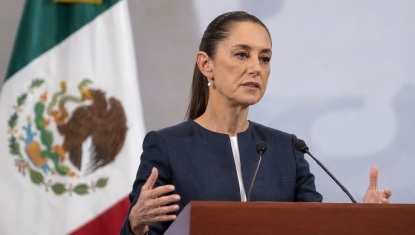
Mexico is experiencing a revival in cultural and diplomatic relations with Spain and France, marking a shift from previous years of tension. Under President Claudia Sheinbaum, the Mexican government has embraced cultural diplomacy as a key strategy to mend ties with these European nations, focusing on cultural exchanges, exhibitions, and the return and loan of historic artifacts.
Relations with Spain had previously soured during former President Andrés Manuel López Obrador’s administration, primarily due to his demands for Spain to acknowledge historical abuses from the conquest era. However, through various cultural initiatives, Sheinbaum’s administration has made significant strides in improving diplomatic engagement. Notable efforts include Spain’s recognition of Mexican photographer Graciela Iturbide and the National Museum of Anthropology, alongside Mexico’s loan of over 400 pre-Hispanic artifacts for exhibitions in Madrid.
Similarly, Mexico’s diplomatic relations with France have seen a positive transformation. Past disputes, such as those involving the Florence Cassez case during the terms of Felipe Calderón and Nicolas Sarkozy, had strained interactions. With renewed focus under President Sheinbaum and French President Emmanuel Macron, the two countries are fostering stronger cultural cooperation.
In a gesture celebrating the 200th anniversary of diplomatic relations, France has loaned the Azcatitlan Codex to Mexico. This historic manuscript, which offers insights into the history and migration of pre-Hispanic peoples, is set to be displayed at Mexico’s National Museum of Anthropology and History, further underscoring the strengthened ties between the two nations.
These cultural exchanges are seen as pivotal in creating a platform for deeper diplomatic relationships, highlighting the role of cultural diplomacy in international relations. Mexico’s strategic use of cultural initiatives is effectively enhancing its global partnerships, setting a precedent for future engagements.