
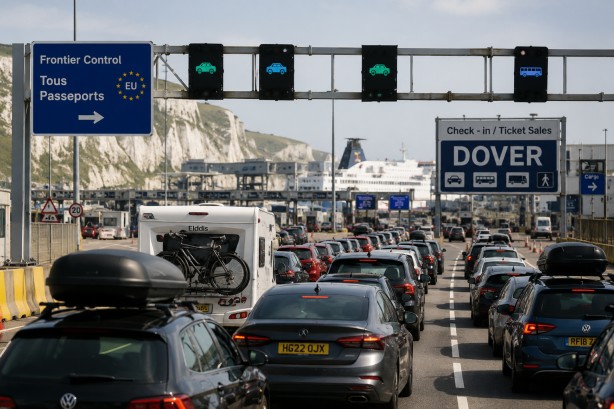
As the summer holiday season kicks off, the Port of Dover is gearing up for one of its busiest weekends of the year. This surge in travel comes amid concerns about potential delays due to new European Union border procedures, which could lead to longer waiting times for those traveling to the continent. The rush coincides with the start of school holidays across England and Wales, bringing thousands of vehicles to the port.
Currently, French border officials at Dover are set to manually register non-EU travelers under the EU’s Entry/Exit System (EES), a process that was initially intended to be automated. Technical issues have delayed the setup of automated processing facilities, necessitating the manual approach. Although biometric data like fingerprints and photographs will not be collected at this stage, the manual registration is expected to slow down processing times, potentially causing congestion.
Alongside the situation at Dover, motoring organizations have issued warnings about the likelihood of heavy traffic on major UK roads. This is particularly expected around London and routes heading to the southwest, as millions of people commence their summer leisure trips. Many travelers are choosing to stay within the UK for their holidays, encouraged by favorable weather conditions, concerns over flight disruptions, and the rising costs of travel abroad.
To manage the anticipated influx, the Port of Dover has advised passengers to stick to designated routes and to arrive no earlier than two hours before their scheduled ferry departure. Similarly, airport operators and airlines have also advised travelers to brace for potential delays as the peak holiday travel period gets underway. These measures are part of broader efforts to mitigate the impact of increased travel demand and the new border procedures on passenger flow.