
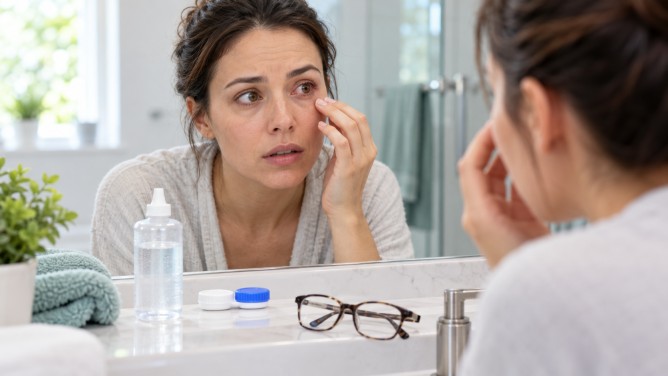
Contact lenses offer a convenient alternative to glasses, but improper use and poor hygiene can lead to serious eye problems. Recognizing early warning signs can help prevent complications and protect your vision.
Several symptoms may indicate that your contact lenses are causing harm. Persistent redness could signal irritation or infection, requiring medical attention if it continues after lens removal. Eye pain is another red flag, potentially indicating corneal damage or inflammation. A burning or stinging sensation might result from dryness or a poor lens fit, while sensitivity to light could warn of corneal inflammation. Blurred or reduced vision should not be overlooked, as it may signify more than simple lens discomfort.
Excessive watering of the eyes often accompanies irritation or inflammation, and unusual discharge may point to infection. Additionally, a gritty or foreign-body sensation could suggest dryness or a scratch on the cornea. If any of these symptoms occur, it’s crucial to remove your lenses immediately and seek an urgent eye examination. Avoid using leftover eye drops without consulting a healthcare professional.
Safe contact lens practices can mitigate risks. Ensure hands are clean before handling lenses, use the recommended disinfecting solution, and avoid sleeping with lenses unless prescribed for overnight use. Keep lenses away from water and follow replacement schedules as directed by eye-care professionals.
Children and teenagers can wear contact lenses with proper prescription and hygiene practices. However, those with active eye infections, dry eyes, severe allergies, or certain inflammatory conditions should exercise caution. Individuals working in environments with dust, smoke, or chemicals should take additional protective measures.
Contact lenses are safe and effective when used correctly, but comfort should never come at the expense of eye health. Persistent irritation or discomfort warrants consultation with an eye-care professional to evaluate the suitability of the lenses or consider alternative solutions like glasses.