
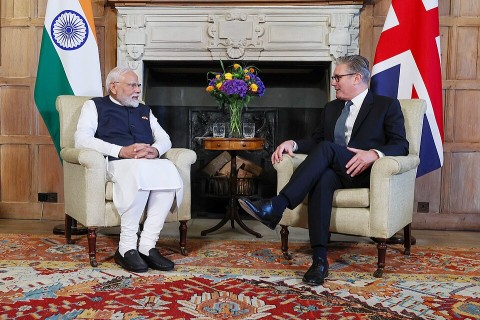
In a significant diplomatic achievement, outgoing British Prime Minister Keir Starmer successfully concluded the long-anticipated India-UK Free Trade Agreement (FTA) just before announcing his resignation. The deal, finalized during a meeting with Indian Prime Minister Narendra Modi at the G7 Summit 2026, sets July 15 as the implementation date for the India-UK Comprehensive Economic and Trade Agreement (CETA). This landmark agreement is poised to bolster the economic partnership between the two nations, which currently enjoy bilateral trade valued at approximately £48 billion annually.
Starmer, a staunch advocate for strengthening ties with India, prioritized the trade deal as a central goal of his administration. He emphasized the agreement’s potential to boost economic growth, noting India’s expanding influence in the global economy and the advantages of facilitating more accessible and cost-effective trade between the UK and India. Throughout his tenure as Labour leader following the party’s 2019 election defeat, Starmer focused on rebuilding connections with the British Indian community and fostering a stronger alliance with India.
Under Starmer’s leadership, the Labour Party committed to enhancing collaboration with India across various sectors, including trade, security, education, technology, and climate initiatives. Before entering the political arena, Starmer had an illustrious legal career, serving as the Director of Public Prosecutions. He ascended to the role of Prime Minister after Labour’s sweeping election victory in 2024. Despite early triumphs in stabilizing the economy and advancing domestic reforms, Starmer’s leadership was eventually undermined by a series of policy challenges and political setbacks.
In a heartfelt resignation speech, Starmer acknowledged that the parliamentary party no longer viewed him as the right leader to guide Labour into the next general election. He expressed respect and gratitude for their decision, marking the end of a notable era in British politics. His departure concludes a significant chapter characterized by efforts to enhance UK-India relations and navigate complex political landscapes.